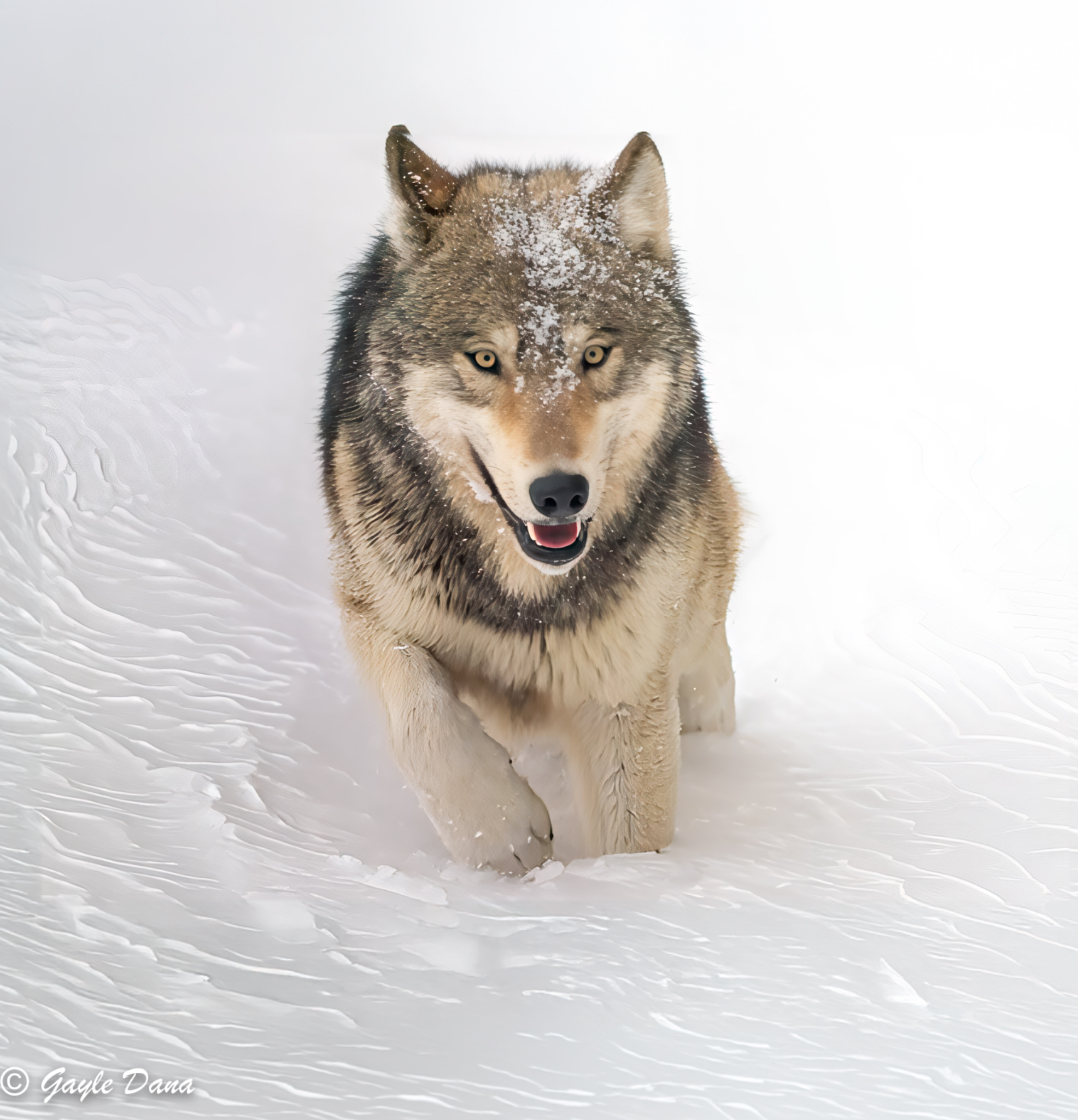
Wolves
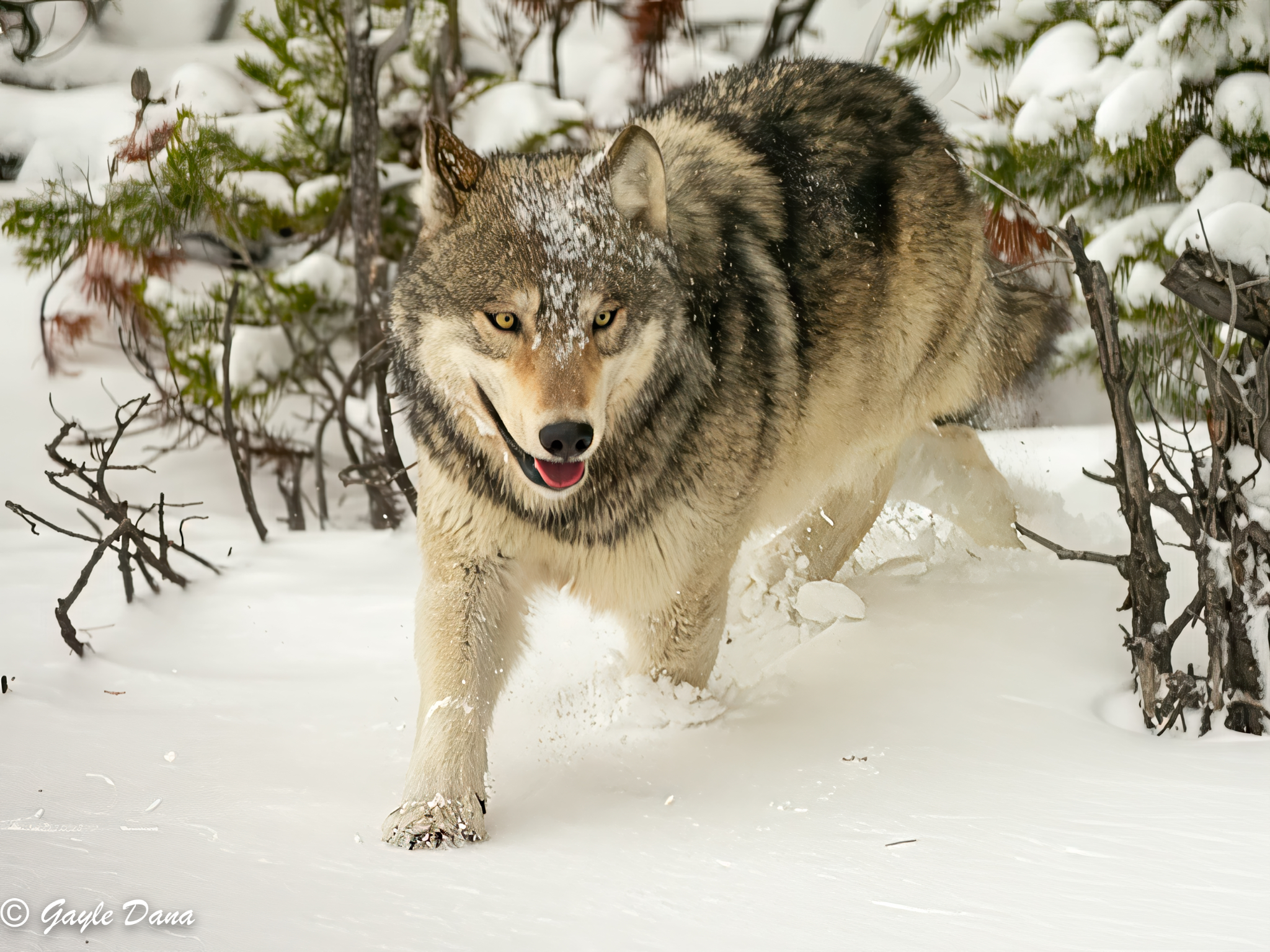
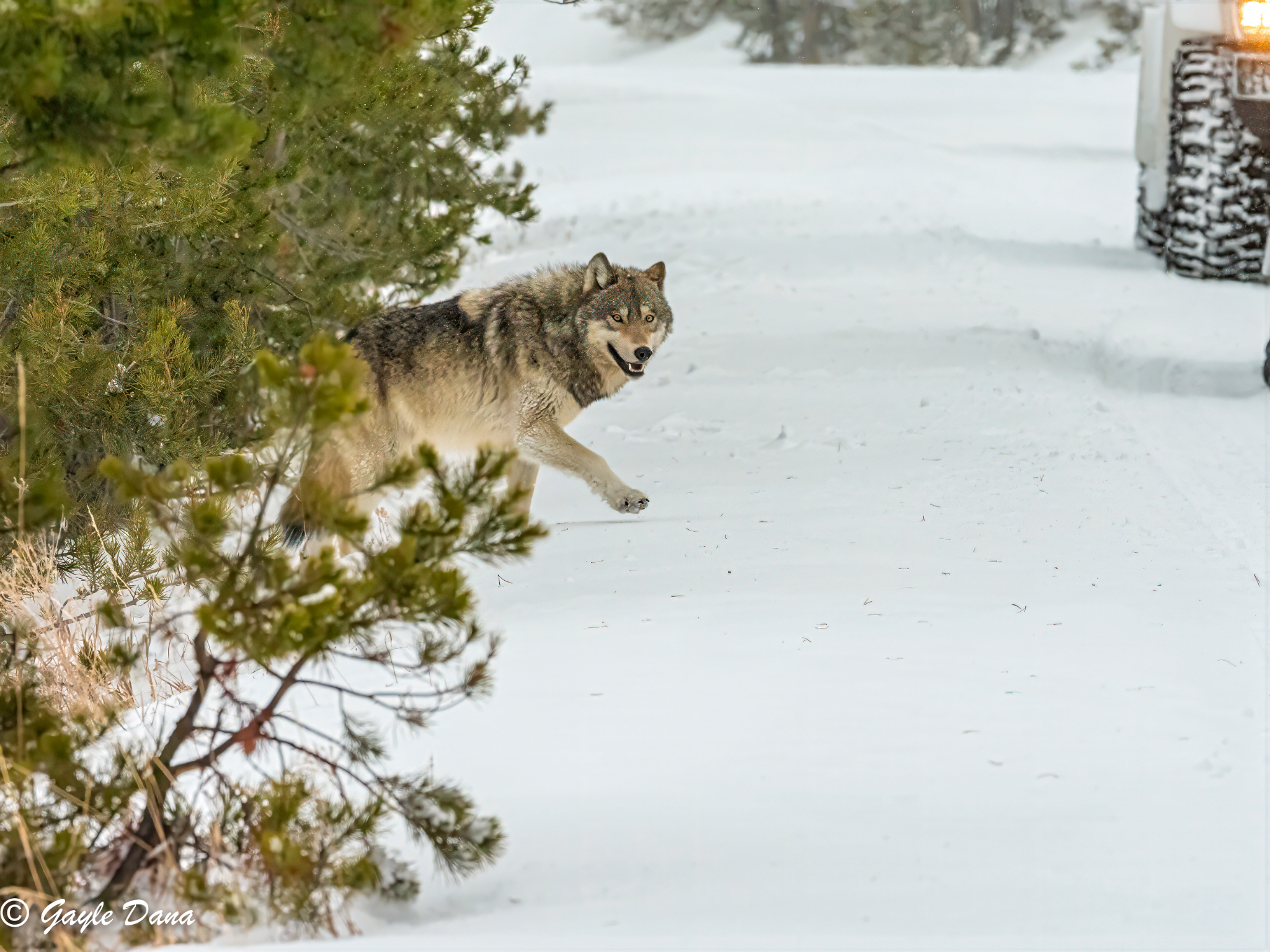
In the early morning dawn on the second day of the trip, we came upon a lone female Gray wolf eating from a carcass. We watched silently from our vehicle nearby, the wolf seemingly nonplussed by our presence. Later, once the wolf had had her fill, she trotted off, weaving in and out of the forest along the snow-covered road that we drove slowly along, keeping a respectful and lawful distance. At one point she howled – was she communicating with her pack? I don’t know, but there are a number of reasons why a wolf goes solo in the wild. One reason is “dispersing. This is how wolves find mates and form new packs.
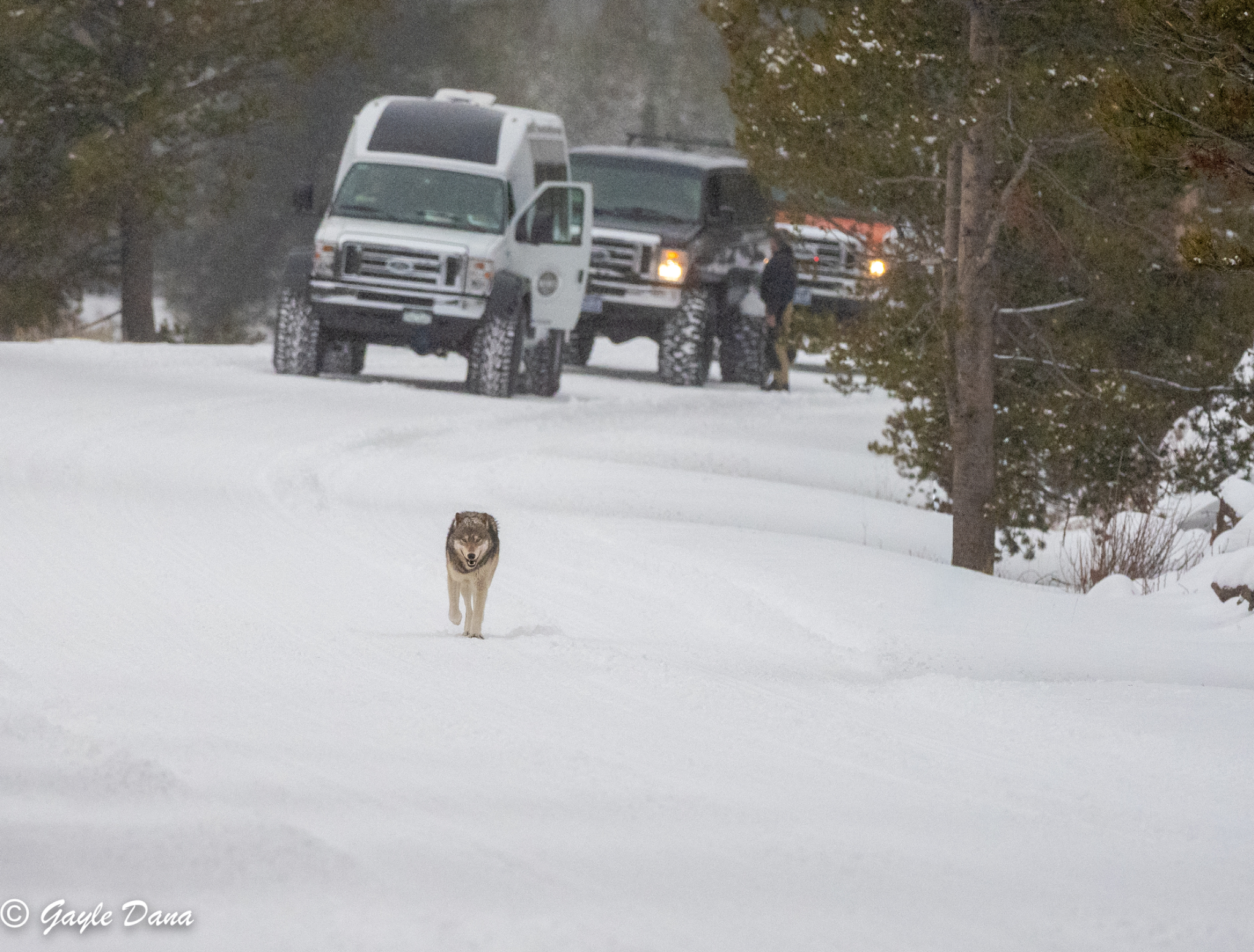
The impact of tourism on wolves is carefully managed to maintain the natural, wild behavior of the packs within the park. Snowcoaches allow for quiet, slow-moving, and non-intrusive observation of wolves. While wolves are generally habituated to the presence of vehicles in the park, they typically ignore or move away from snowcoaches, rather than being chased or highly disturbed by them.
This wolf just trotted along in front of the slow-moving snow coaches.