Sloths Coati Porcupines
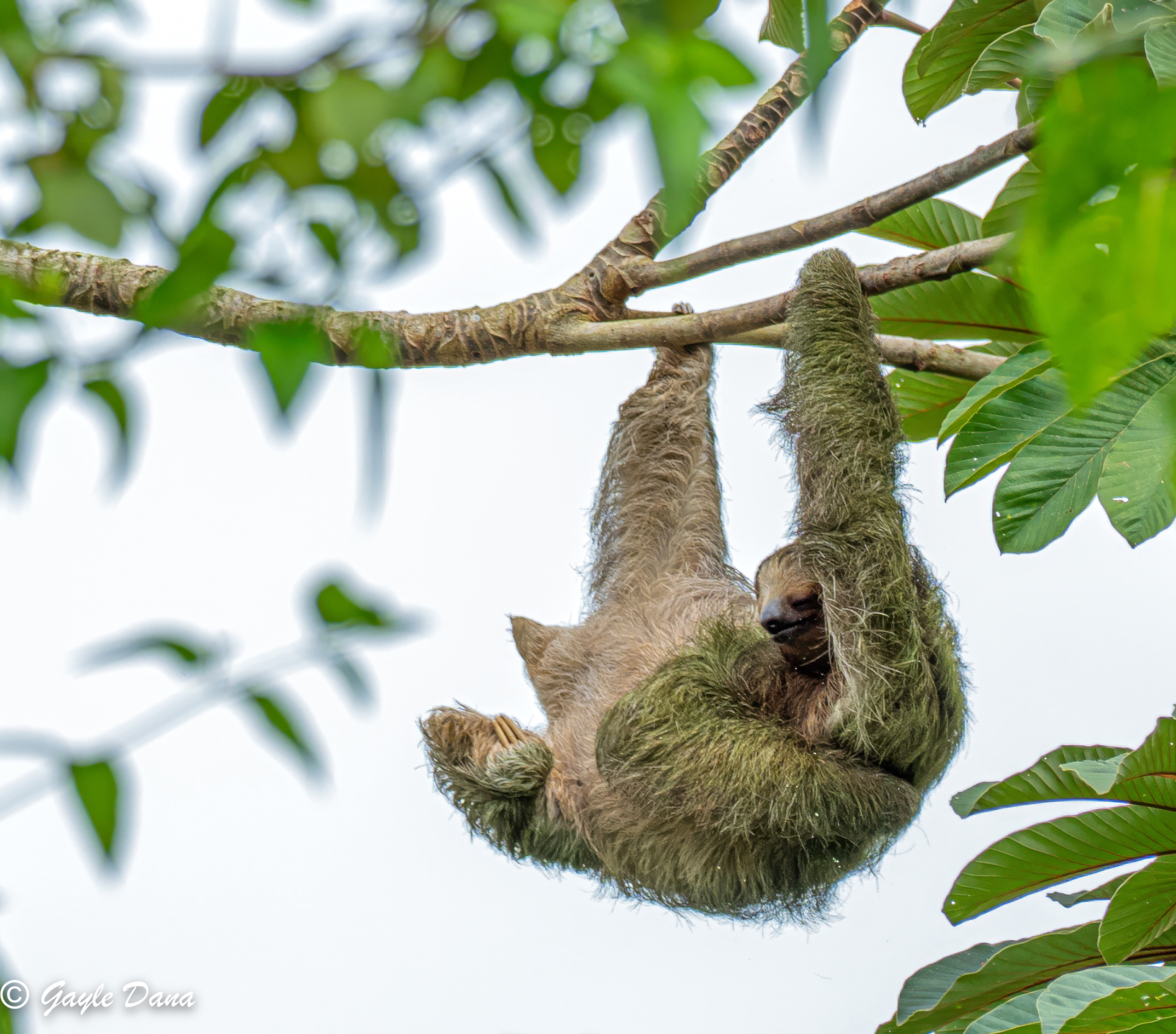
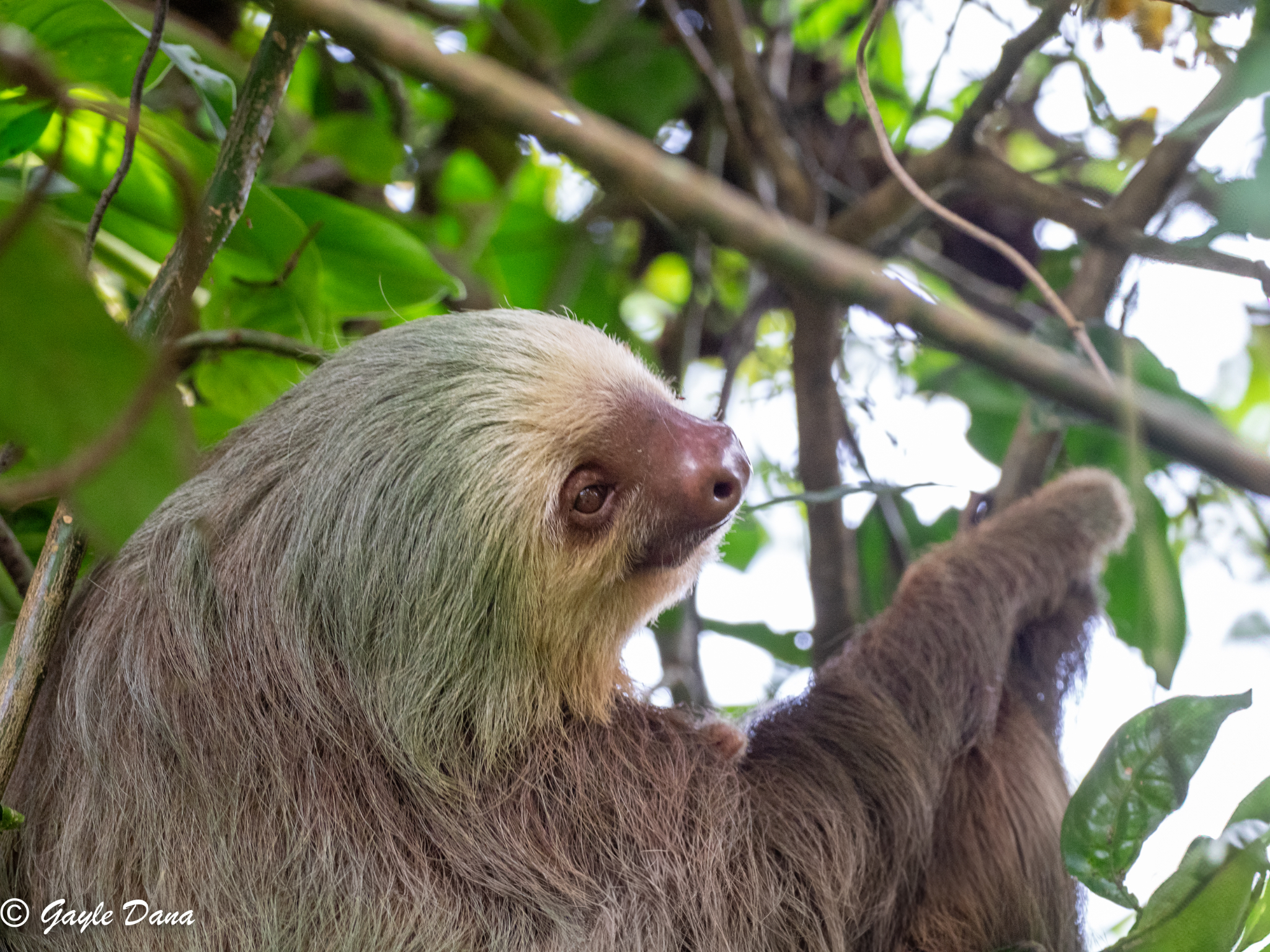
There are two different types of sloths in the world, two-toed and three-toed, and six species. We saw the two species that are native to Costa Rica. The name "sloth" means "lazy", but their slow movements are actually an adaptation for surviving on a low-energy diet of leaves. Sloths have very poor eyesight, caused by a genetic disorder known as rod monochromacy. This causes them to be fully colorblind and almost completely blind at night and as a result, sloths rely almost entirely on their senses of touch and smell to find food.
Brown-throated Three-toed Sloths sleep 15 to 18 hours every day and are active for only brief periods of time, which may be during either the day or night. Although they can walk along the ground, and even swim, they spend most of their lives in the high branches of trees, descending once every eight days or so to defecate in the soil. Feces and urine can account for up to a third of their body weight!
Hoffmann's Two-toed Sloths are almost exclusively nocturnal and it is thought this is in part due to competition with the Brown-throated Sloth. They often move slowly through the canopy for about eight hours each night, and spend much of the day sleeping in tangles of long-stemmed woody vines in the canopy.
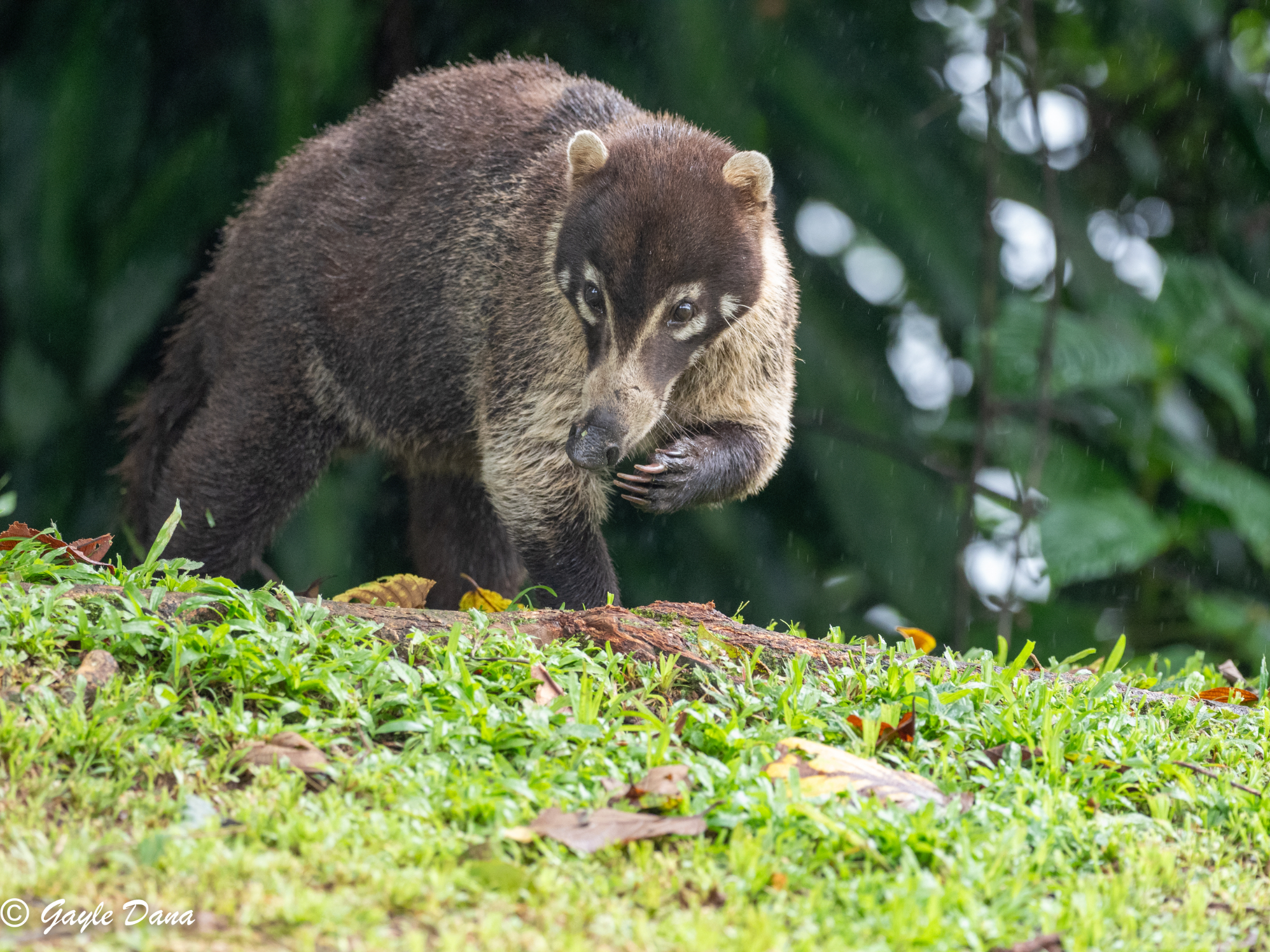
White-nosed Coati, also known as the Coatimundi, are a member of the Racoon family. Males are up to 3.5 ft long and 20 lbs. They occur as far north as Flagstaff AZ.
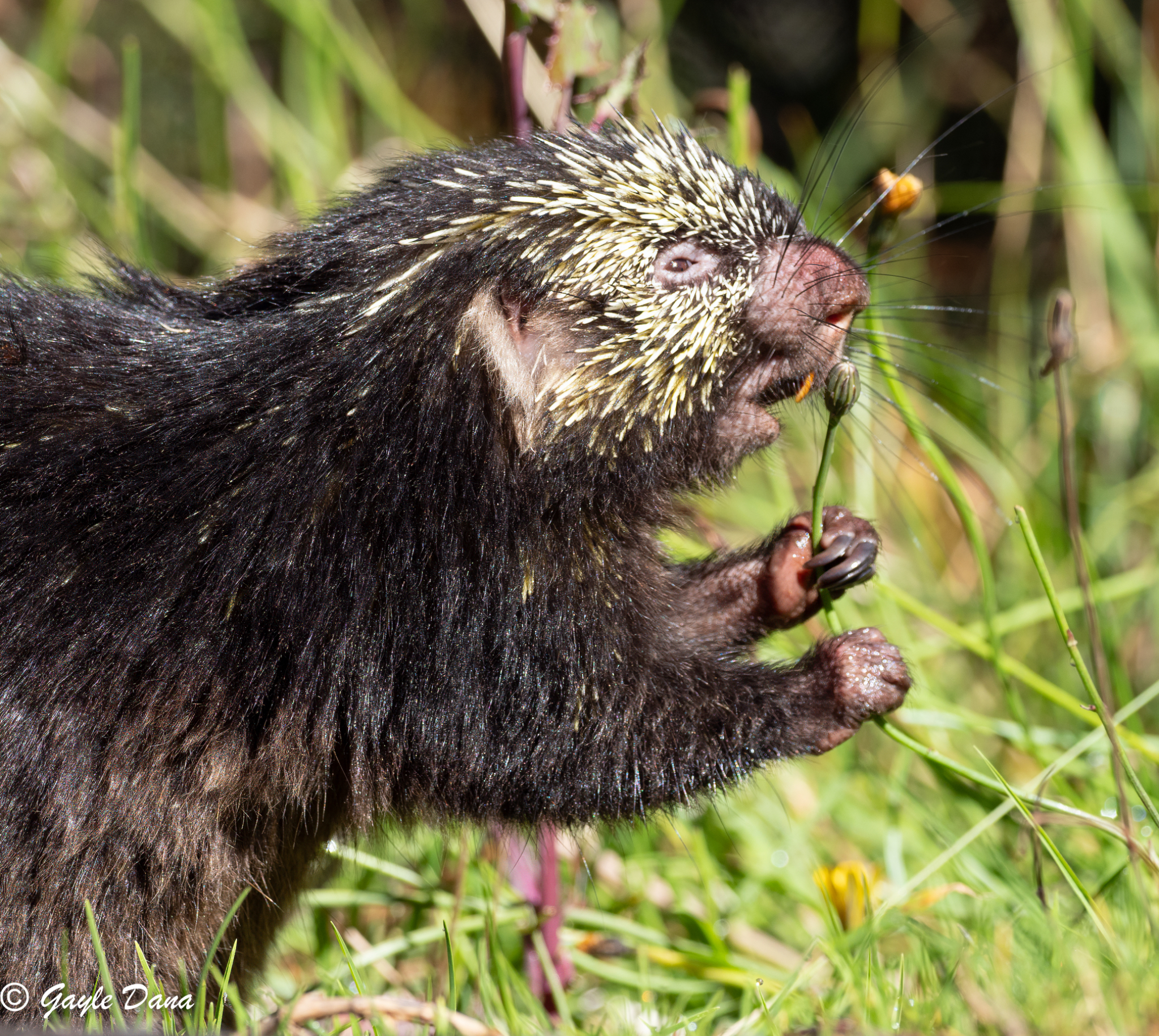
It was a special treat to see this Mexican Hairy Dwarf Porcupine because it is typically arboreal and nocturnal and is usually more active on dark nights. During the day it usually spends time in a hollow tree, concealed on a leafy branch.